





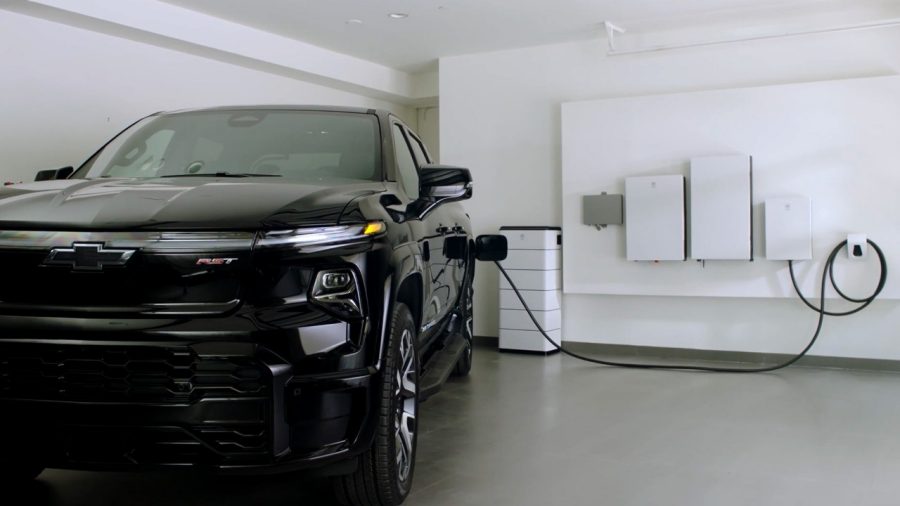
Imagine a storm knocks out the power grid. Usually, this means scrambling for flashlights, worrying about the food in the fridge, or dragging out a noisy, fume-spewing gas generator.
But what if the solution was already parked in your driveway?
We often think of electric vehicles (EVs) solely as transportation—a way to get from point A to point B without visiting a gas station. However, General Motors is rewriting that narrative. They aren’t just building cars; they are creating a comprehensive home energy ecosystem. With their latest Vehicle-to-Home (V2H) technology, your car becomes a silent, powerful backup generator that keeps the lights on when the grid goes dark.
Here is how GM is turning electric vehicles into essential home appliances and why this shift matters for your wallet and your peace of mind.
The Rise of the Two-Way EV
For years, the relationship between a home and an EV was one-way: the house fed electricity to the car. GM Energy has flipped the switch on this dynamic.
By the end of 2025, GM had already sold more than 246,000 vehicles equipped with V2H technology. These aren’t just cars; they are mobile energy storage units. When paired with the right home equipment, these vehicles can send electricity back into your house.
This capability transforms an EV from a simple mode of transport into a critical asset for energy independence. Whether you are facing a rolling blackout or a severe weather event, a properly equipped GM EV can step in to power essential home circuits, keeping your family safe and comfortable.
Breaking Down Barriers with Leasing
Historically, the biggest hurdle to adopting home energy systems—like solar panels and battery storage—has been the upfront cost. Purchasing a full home backup system can be a significant financial commitment.
GM Energy is tackling this obstacle head-on. To make this technology accessible to more homeowners, they are exploring a leasing program for their home energy management systems and PowerBank home batteries.
Why Leasing Changes the Game
- Lower Upfront Costs: Instead of a massive initial investment, homeowners can pay a monthly fee, similar to leasing the vehicle itself.
- Budget-Friendly: It fits neatly into a monthly budget, making energy independence a realistic option for a wider range of families.
- Accessibility: As Wade Sheffer, vice president of GM Energy, noted, this initiative is about “removing a barrier” and making the technology available to any homeowner—not just those who already own a GM EV.
This move democratizes energy storage, allowing more people to take control of their power usage without breaking the bank.
Real-World Impact: More Than Just Theory
This technology isn’t futuristic sci-fi; it is happening right now in driveways across the country. Homeowners are already using their vehicles to weather storms and manage costs.
Surviving the Storm
Take the example of homeowners Jack and Jodie. When hurricane evacuations loomed, they utilized their system to stay powered. Similarly, during Gulf Coast hurricanes and West Coast wildfires, other owners have kept their lights on using only the energy stored in their vehicle’s battery. Unlike loud gas generators that require constant refueling and maintenance, an EV provides silent, clean power.
Financial Independence
It isn’t just about emergencies. Jon McNeill uses his Chevrolet Silverado EV combined with solar and battery storage to gain energy independence. He manages his daily energy costs and even positions himself to earn utility incentives.
By charging their EVs overnight when electricity rates are typically lower and using that stored energy to power their homes during peak hours (when rates skyrocket), homeowners like Kennet are seeing real savings on their monthly electric bills.
The Grid of the Future
GM is looking beyond the individual home. They are actively working toward a future where cars, homes, and the electrical grid work in harmony.
Programs like “Free Charge Nights” in Texas (a partnership with Reliant Energy) are already incentivizing smarter charging habits. Furthermore, pilots like the one with PG&E are exploring Vehicle-to-Everything (V2X) capabilities. This allows EVs to send power back to the grid during times of high demand, potentially earning the vehicle owner money or credits.
GM Energy has seen positive internal testing for this vehicle-to-grid capability and is currently working to certify it with local utilities. This means your car could soon become an active participant in stabilizing the local power grid, benefiting your entire community.
Bring Your EV to Eagleson Automotive Center Today
The era of the passive vehicle is ending. As we move forward, our cars will do more than drive us to work; they will protect our homes from outages, lower our energy bills, and help stabilize the public grid.
GM’s commitment to V2H technology and accessible leasing programs signals a major shift in how we consume and store energy. It offers a smarter way to manage power, ensuring that every dollar spent on a vehicle delivers value even when the car is parked.
To learn more about GM’s Vehicle-to-Home technology or to see how an EV can transform your home’s energy future, contact Eagleson Automotive Center at (618) 393-2148. Our team can answer your questions and guide you toward the next step in smart energy living.
Connect with us


